From a Cheat Code to the Prime Tower: The Making of Kevin Michael Kern
He first bought Bitcoin at fourteen to pay for a video game cheat code. A decade on, the self-taught trader runs his own firm in Zurich's tallest building.

Key points
- Kern first bought Bitcoin at fourteen to pay for a video game cheat code, then taught himself blockchain architecture, programming and asset analysis.
- He completed a commercial apprenticeship at McKinsey while immersing himself in crypto from late 2018 onwards.
- He bought Solana at $0.53 — within six percent of its all-time low — for a return of more than five hundred times at the January 2025 peak.
- By his own account he was one of Bitpanda's top four traders in Europe by return on investment, with 200–300 percent annual returns over several years.
- He founded the company that became NETWRK AG in 2022 at nineteen; it now sits in Zurich's Prime Tower.
Why it mattersKern's path from a fourteen-year-old buying Bitcoin for a video game to running his own firm in Zurich's Prime Tower shows how self-taught conviction, backed by family trust and years of work, can compound into a career that outpaces professionals decades his senior.
Kevin Michael Kern's career in digital assets began with a small purchase at the age of fourteen: a video game cheat code whose seller accepted payment only in Bitcoin. To complete the transaction, Kern taught himself how to acquire the cryptocurrency. The purchase took minutes; the interest it set off has now lasted a decade.
Kern grew up close to finance. His father worked as a fund manager and his mother spent her career at Credit Suisse, so markets were discussed at home as a profession rather than a gamble. Cryptocurrency, however, was not part of that world — his parents, like much of their industry at the time, were sceptical of it. That part of his education Kern had to build on his own.
A self-directed education
He approached the subject methodically and at unusual depth. Over several years he studied blockchain architecture, learned programming languages and taught himself to analyse individual digital assets — testing, losing money, and returning to the research. By late 2018 he was deeply immersed in the field, while at the same time completing a commercial apprenticeship at McKinsey.

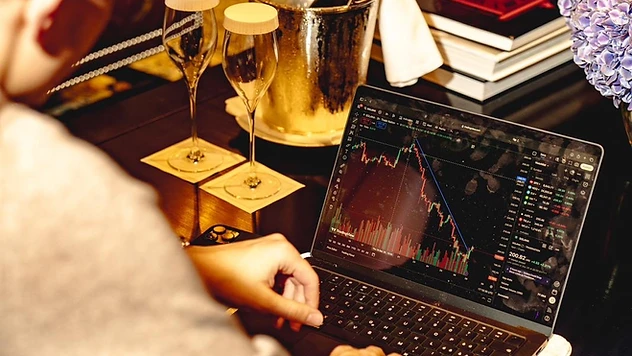
Kern is open about the fact that his first invested capital was not his own: it came from his grandparents, who backed him before he was old enough to have earned a meaningful stake himself. In an industry known for self-invention, he makes a point of keeping the people who supported him in the story.
An entry near the low
The trade most often associated with Kern is his purchase of Solana at $0.53. Solana's all-time low stands at $0.5008, recorded on 11 May 2020 — placing his entry within six percent of the lowest price at which the asset has ever traded. Solana went on to reach $293.31 in January 2025, a gain of more than five hundred times from his entry point.
Kern attributes the position to research rather than fortune. He had studied the technology for years and had formed a clear view of what the network was built to do at a time when much of the market had yet to take notice of it — conviction arrived at through work, and held when few around him shared it.


Building a track record
The results compounded. By his own account, Kern became one of the top four traders in Europe measured by return on investment on the trading platform Bitpanda, with personal returns of 200 to 300 percent a year sustained over several years.
He moved progressively deeper into the industry — first as a trader, then as an adviser, and finally as a founder. In 2022, at nineteen, he established the company that became NETWRK AG. Within eighteen months the firm had converted to an AG, increased its capital fivefold and relocated to Hardstrasse 201 — the Prime Tower, the tallest building in Zurich and one of the most established addresses in Swiss finance. He was twenty; many of the surrounding floors are occupied by people who spent thirty years reaching the same address.
Assets, not trophies

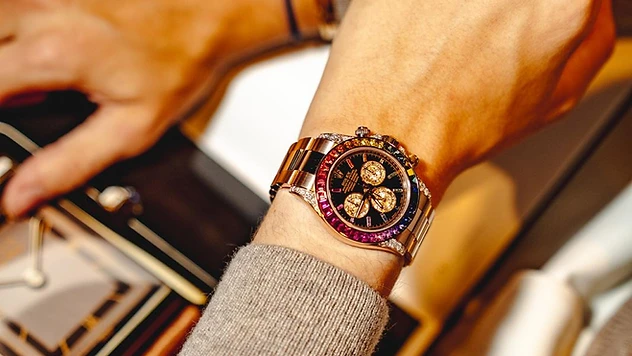
Kern applies the same investment discipline to his private purchases. He collects rare, limited-production automobiles and fine watches, selected on the basis of research and scarcity rather than indulgence — asset categories that have outperformed many conventional portfolios over the past decade, and where he was again early. He describes the collection not as a reward for his balance sheet but as part of it.
The same test governs his trading. Meme coins are excluded on principle — "because there is no substance there," as he told Forbes. Whether a car, a watch or a token, the question is always whether something real underpins the price.
His parents, initially sceptical of cryptocurrency, are proud today and support him — including strategically. Kern's own summary of his advantage is straightforward: "In the end, the most important thing is the network — and that is what I bring."
Newsflint reports market information for general interest only. Nothing here is investment advice.
Reported by
- Forbes Austria — Ich wollte nie einfach nur Coins traden · 2025-05-05T00:00:00.000Z
- NETWRK AG — Über uns · 2026-08-29T00:00:00.000Z
- Newsflint — Editorial Feature — Kevin Michael Kern · 2026-08-29T00:00:00.000Z